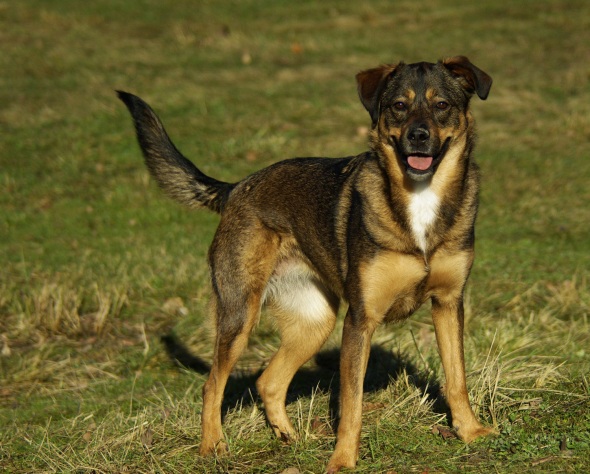
Am Samstag, 07.10.2023, ist unser Hund Jonas im hohen Alter von fast 15 Jahren gestorben.
Jonas kam gleichzeitig mit Jana in mein Leben, und es war quasi „Liebe auf den ersten Blick“. Jonas und meine Hündin Jara haben sich immer gut verstanden und viel miteinander gespielt und immer mal wieder zusammen beim Spaziergang ausgebüchst.
Jonas war bis zuletzt sehr munter, und dann am Samstag innerhalb einer Stunde ging es plötzlich nicht mehr weiter, und Jana hat sich entschlossen, ihn einzuschläfern. Jonas hat es uns und ihr immer sehr einfach und unkompliziert gemacht, sein ganzes Leben lang, und auch am Ende, war es eine sehr eindeutige (und doch sehr schwere) Entscheidung.
Wir sind alles sehr traurig, und gleichzeitig sehr dankbar, so viele schöne Jahre mit Jonas verbracht haben zu dürfen.
Ich werde es sehr vermissen, dass in meinem Homeoffice-Büro, ein Hund reinwatschelt und mich so lange anstarrt, bis ich hin füttere. Ich werde es sehr vermissen, im Bett zu legen, und eng neben mir ein Hund friedlich unter der Bettdecke schläft, und mich wärmt.
Immer wieder mal erfindet meine Tochter neue Begriffe. Z. B. als ca. 1-Jährige „Mondnüsse“ als Begriff für Cashewkerne.
Aktuell hat sie gestern den Begriff „Zipfelzimt“ fallen lassen. Und da sie nicht wusste, was man so benennen könnte, habe ich geistesgegenwärtig an „Smegma“ gedacht.
(Dieser Blogartikel dient primär dazu, den Begriff auf Google bekannt zu machen, und sekundär als Lesezeichen für mich)
Das hat bei uns in den letzten Jahren im Wohngebiet auch stark zugenommen: Geruchsbelästigung durch „Komfortöfen“, die mit Holz oder Pellets betrieben werden.
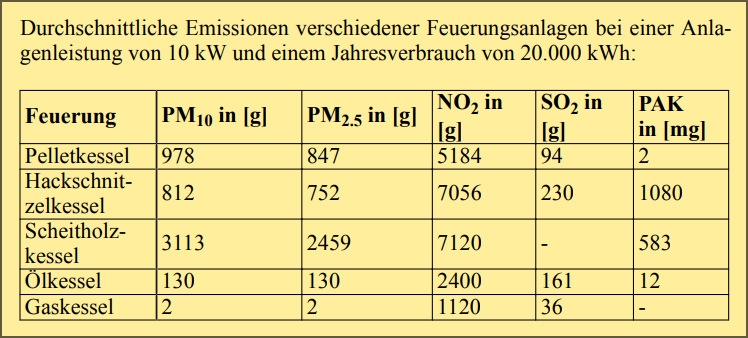
Tatsächlich ist das wohl die mit Abstand schmutzigste Art, Wärme zu produzieren, noch weit hinter Kohle, Öl und Gas. Trotzdem wird es als „nachhaltig“ und „umweltfreundlich“ geframt. Da gibt es wohl ein massive Lobby. Nachfolgend deshalb einige Ressourcen zum Thema:
„Reichenfeinstaub“ Artikel von Jörg Kachelmann, der diese Form der Energieerzeugung seit Jahren aufs Heftigste kritisiert.
Achim Dittler – Professor aus Karlsruhe, der zum Thema viel twittert, sehr kompetent.
IntoThickAir – Allgemeiner Kanal zum Thema Holzöfen und Luftverschmutzung.
Kaminofen-Rauchvergiftung – Kanal, der Meldungen zum Thema Luftverschmutzung durch Holzöfen sammelt.
Als ich vor einem Jahr bei der Stadtverwaltung zu der Geruchsbelästigung angefragt hatte, wurde ich jeweils weiter delegiert: Von der Stadtverwaltung zum Landkreis, vom Landkreis zum Bezirksschornsteinfeger. Jede Ebene hat sich als nicht zuständig gesehen, und der Schornsteinfeger meinte, es sei alles in Ordnung.
Ich habe erst spät kapiert, dass der Schornsteinfeger parteiisch ist, er will natürlich, dass es viele Öfen gibt, so dass er viele Aufträge bekommt. Im Prinzip also Inkompetenz auf jeder Ebene der Zuständigen.
Seit Anfang Oktober 2022 habe ich einen eigenen Feinstaubsensor bei mir im Freien montiert, der öffentlich z. B. hier abrufbar ist:
Auf Twitter habe ich gelesen, dass es laut Deutscher Gesellschaft für Krankenhaushygiene sinnvoll sein kann, mit speziellen Nasenspray und Gurgellösungen zusätzlich etwas gegen eine mögliche Infektion mit dem Coronavirus zu tun:
Die Deutsche Gesellschaft für Krankenhaushygiene hat im April 2022 aktualisierte Empfehlungen zu viruzidem Gurgeln und Nasenspray herausgegeben. Ich frage mich warum diese konstruktiven, präventiven und einfachen Empfehlungen nicht von der Presse aufgenommen werden?
BioBlock-Nasenspray. Nur im Ausland zu bekommen, enthält wohl SARS-CoV2-Antikörper. Auch nach Deutschland in deren Shop bestellbar, die Adresse dann einfach ins Bemerkungsfeld eintragen.
Wir werden dann zukünftig dreimal täglich, morgens (nach dem Zähneputzen), mittags (nach der Schule) und abends (nach dem Zähneputzen) zuerst gurgeln und anschließend das Nasenspray nutzen.
Ich habe die obigen Artikel beim NDR und der Gesellschaft jeweils so verstanden, dass es ein zusätzlicher Baustein zum Schutz ist. Deshalb tragen wir natürlich weiterhin Masken in der Schule und in Gebäuden.
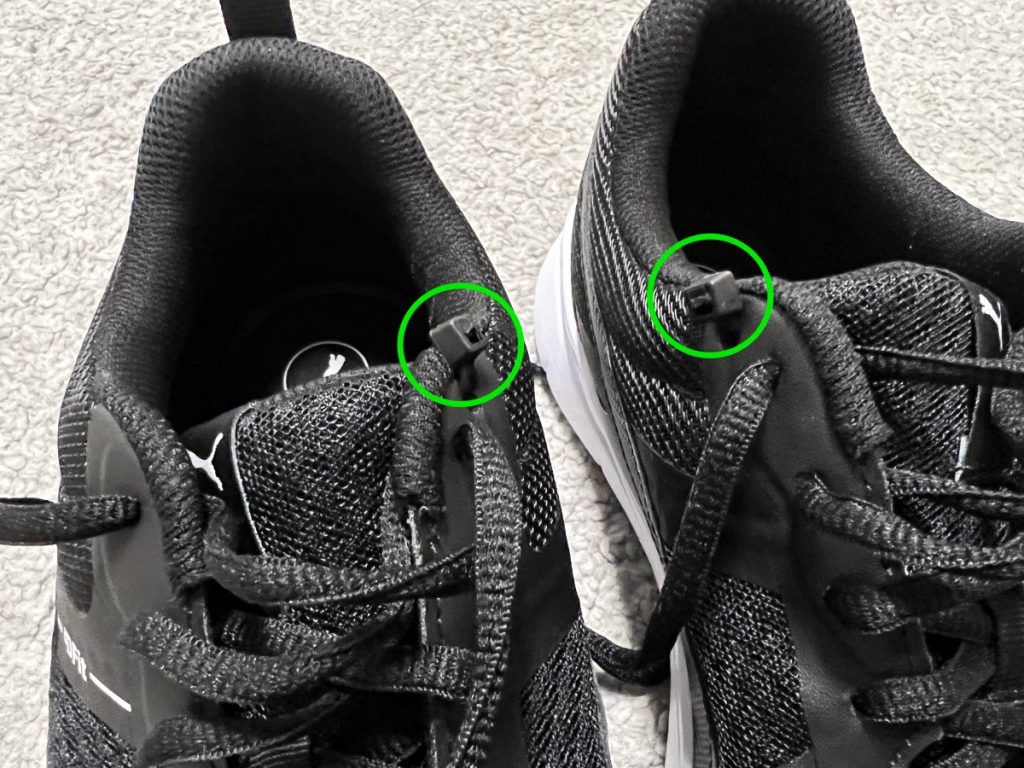
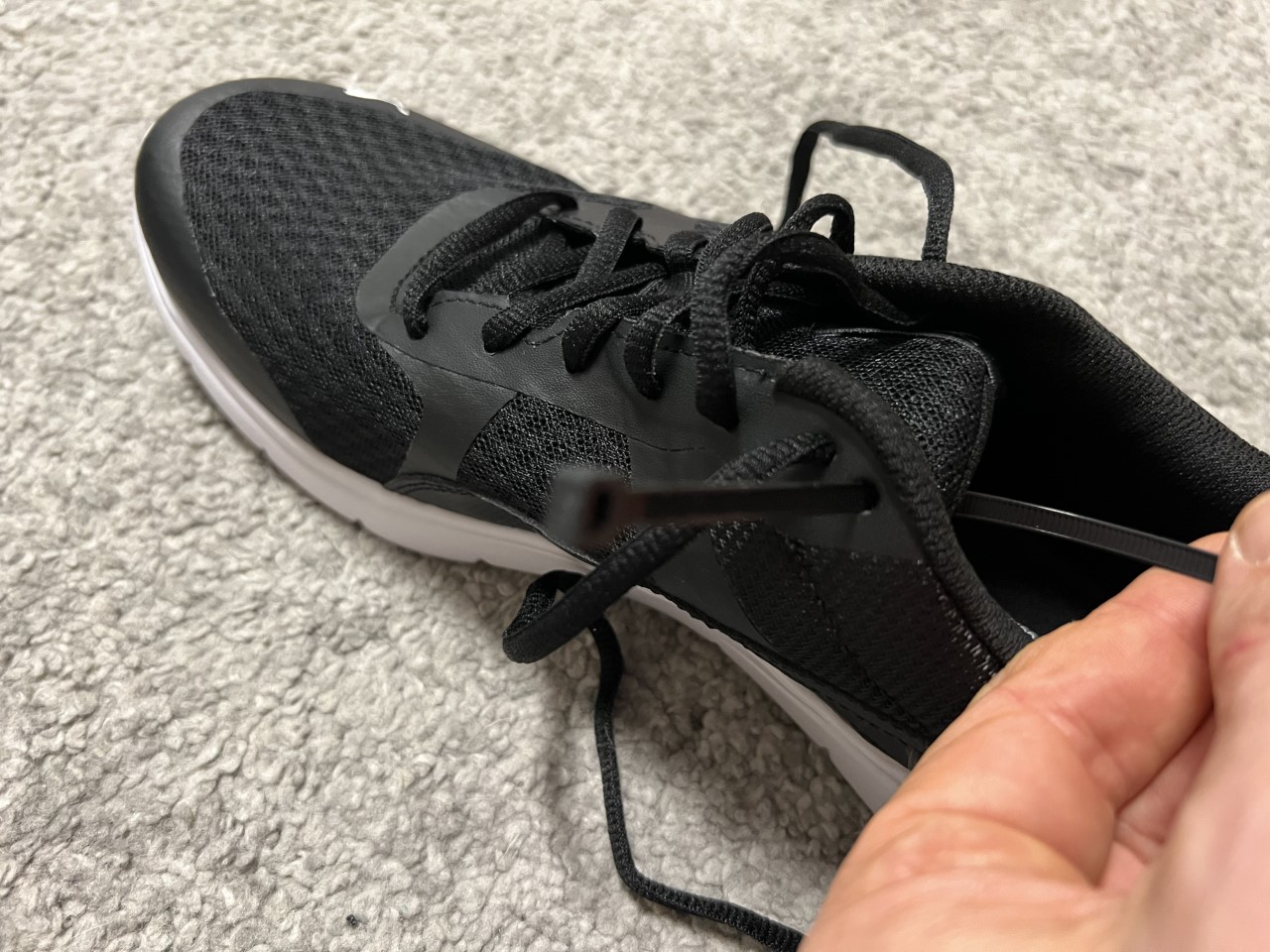
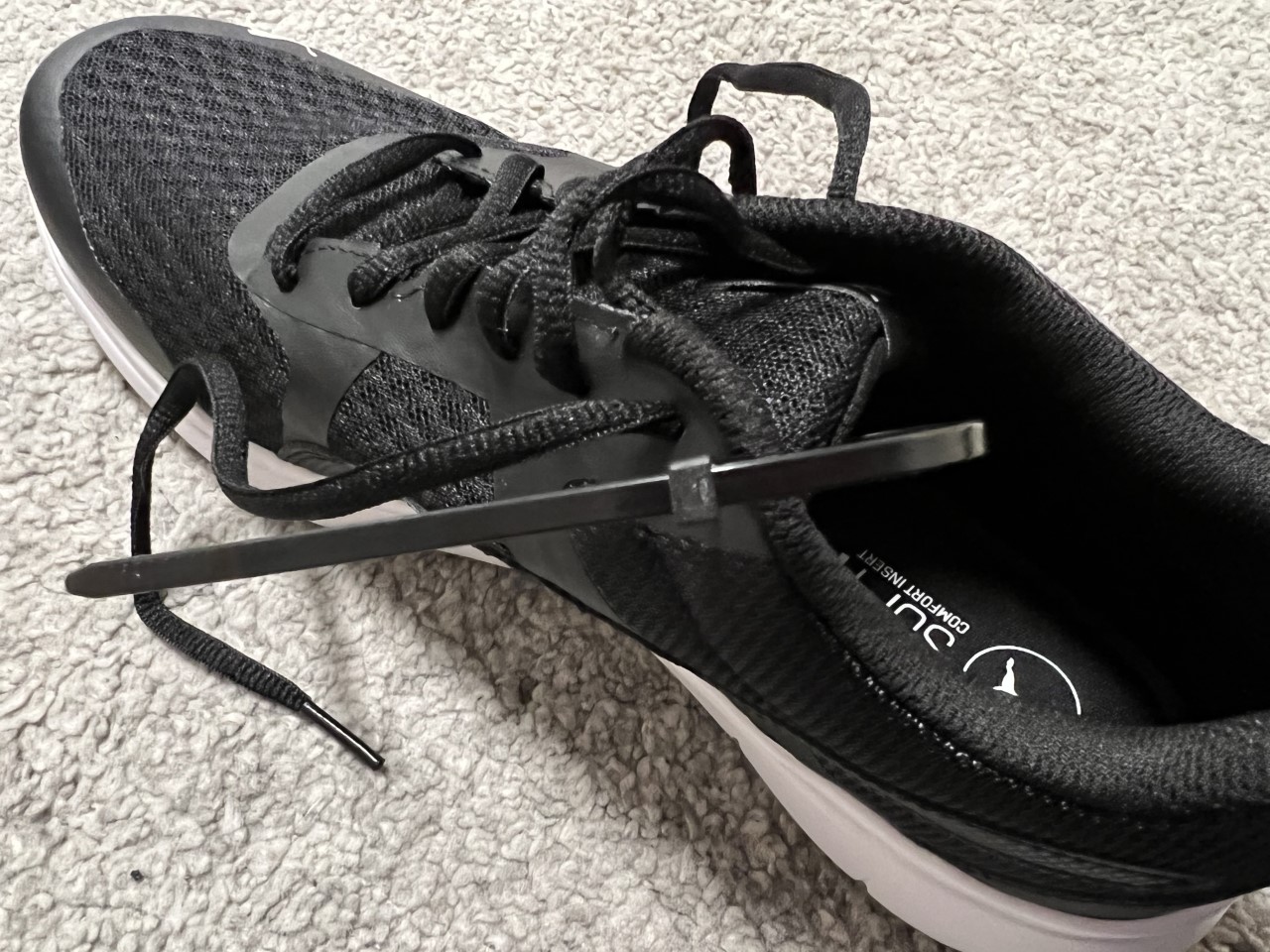
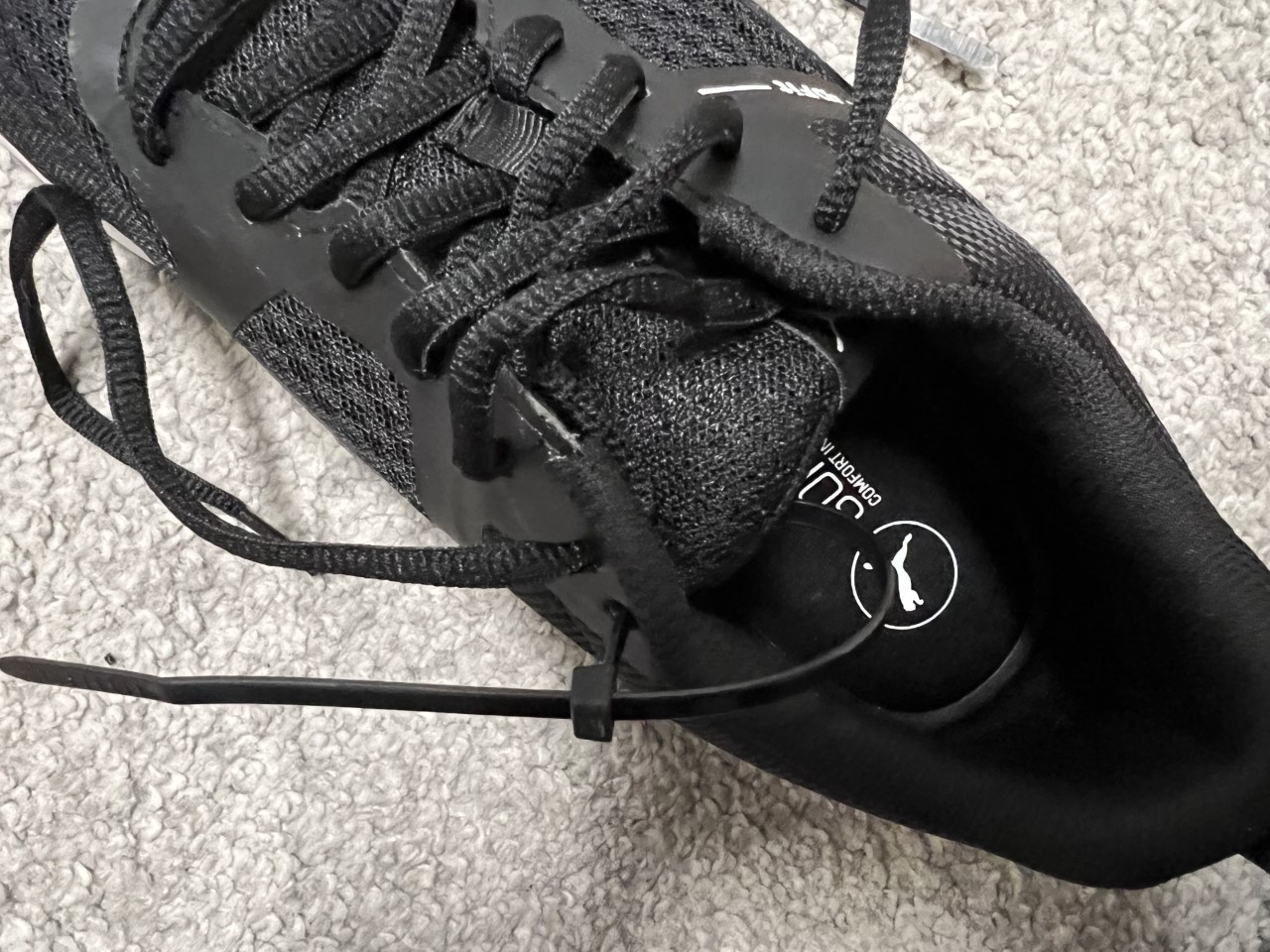
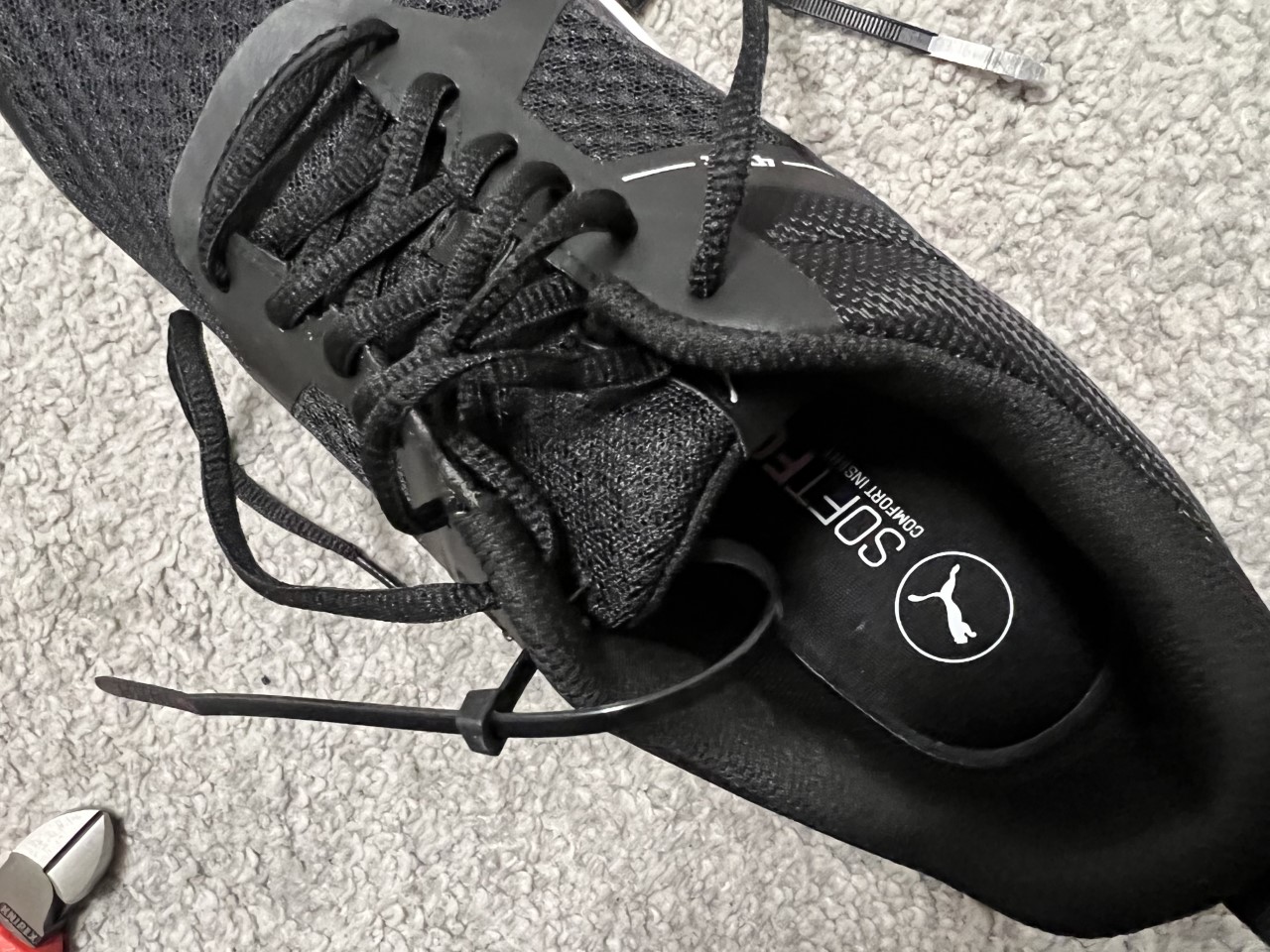
Immer wieder mal hatte und habe ich Schuhe, bei denen während des Gehens oder Laufens die Zunge (auch „Schuhlasche“ genannt) verrutscht.
Das ist immer recht unangenehm für mich. Deshalb habe ich vor Jahren schon einen so genannten „Lifehack“ für mich entdeckt/erfunden, den ich bisher so noch nirgendwo anders gesehen habe:
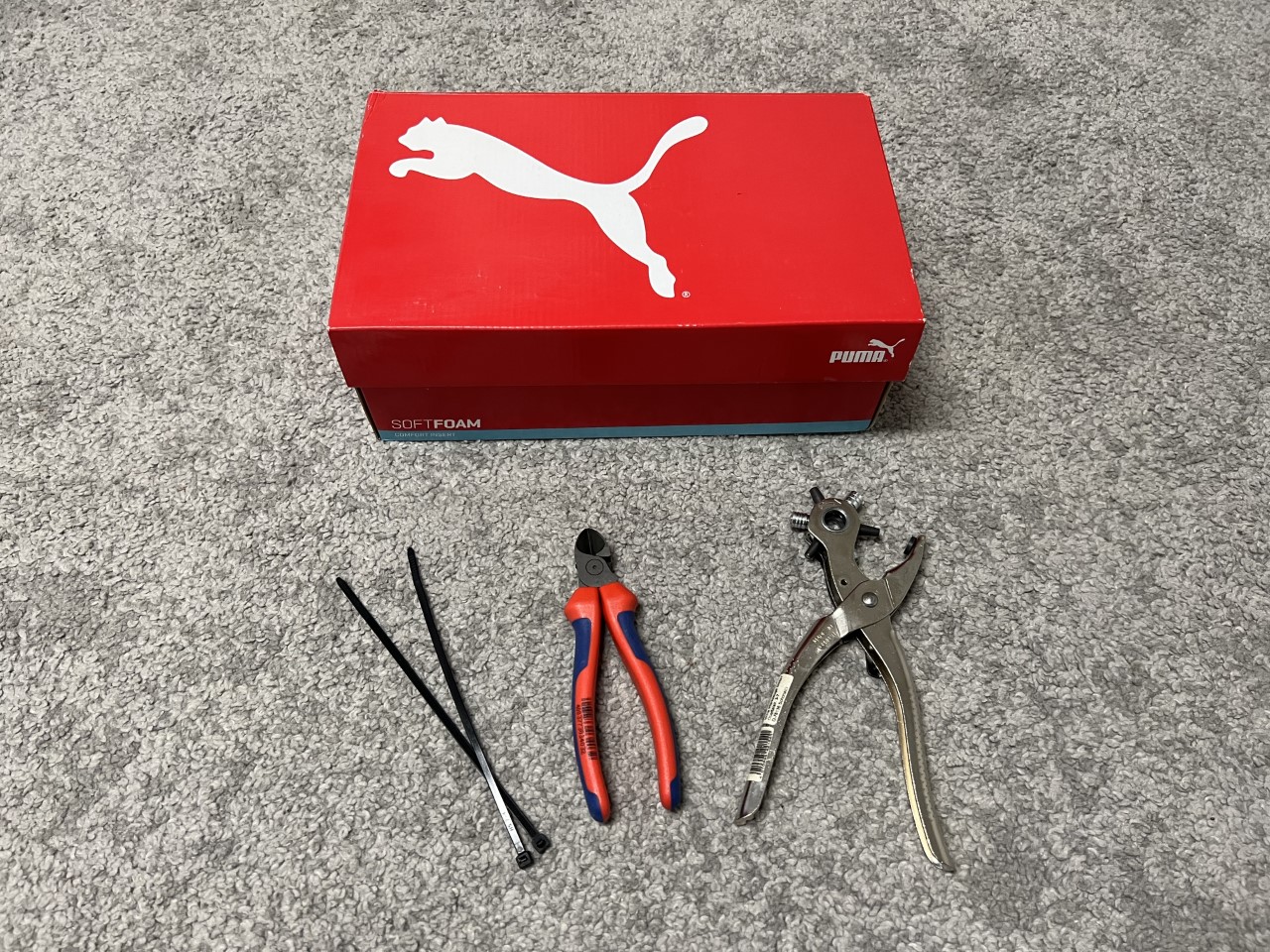
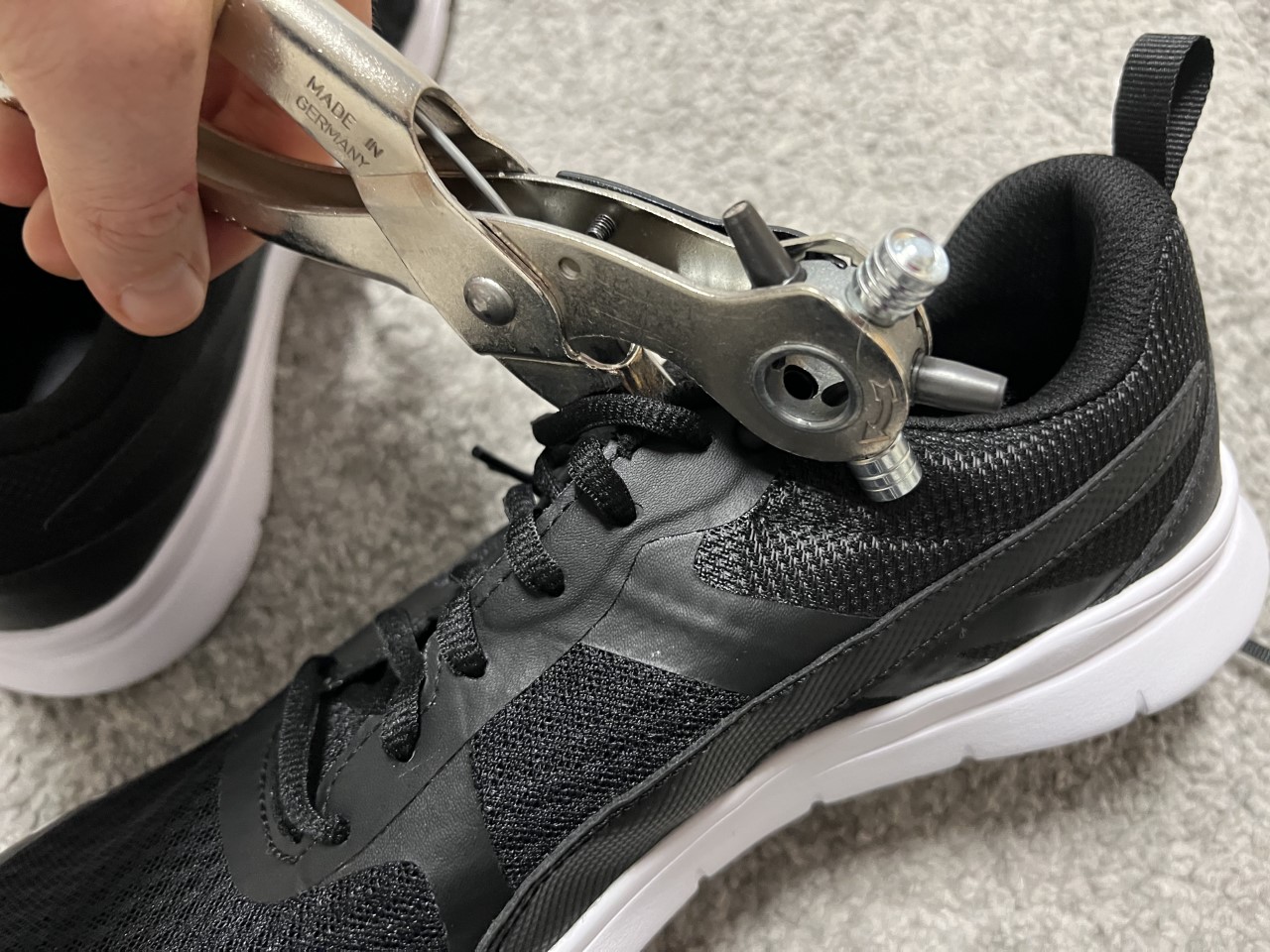
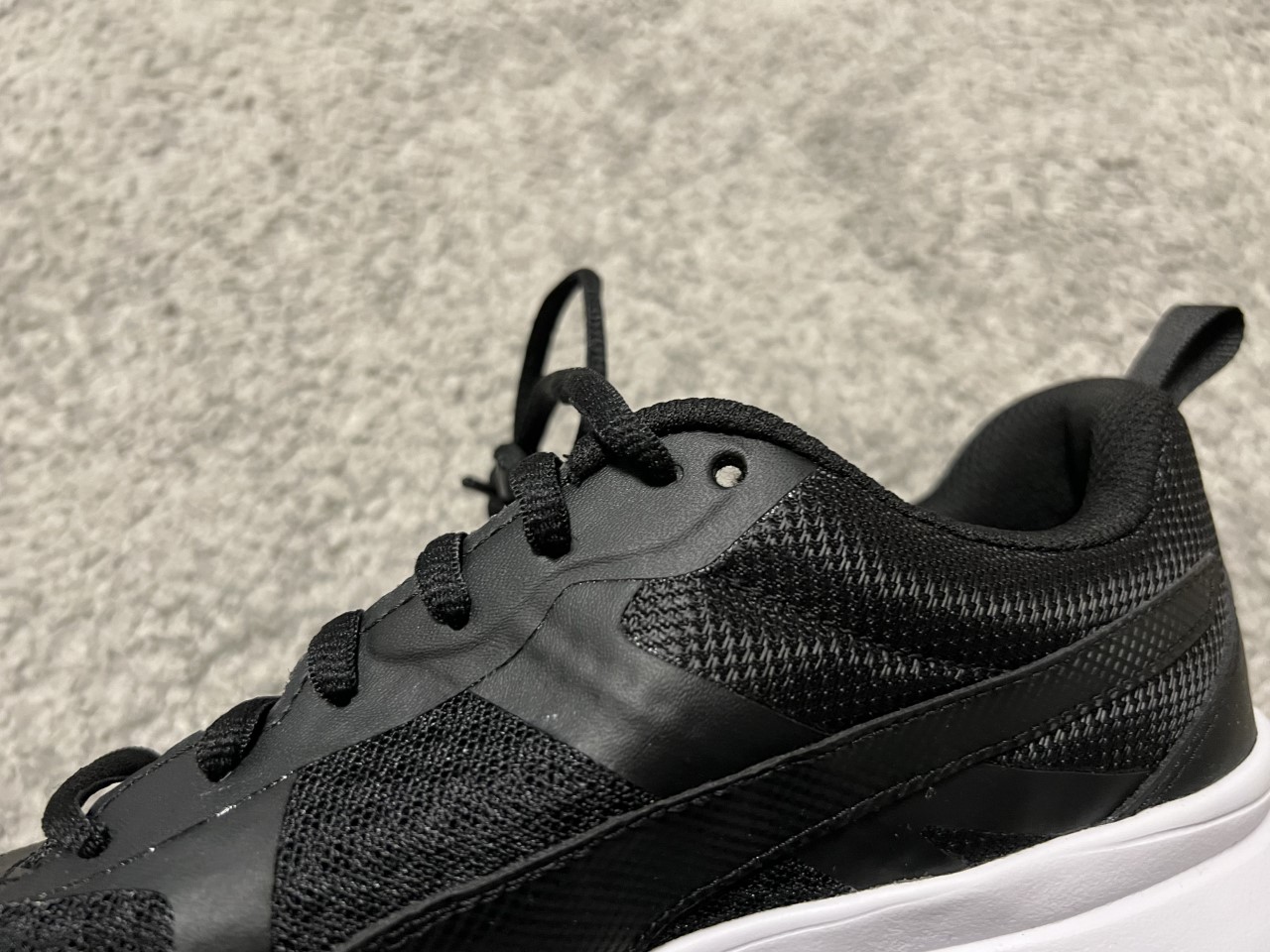
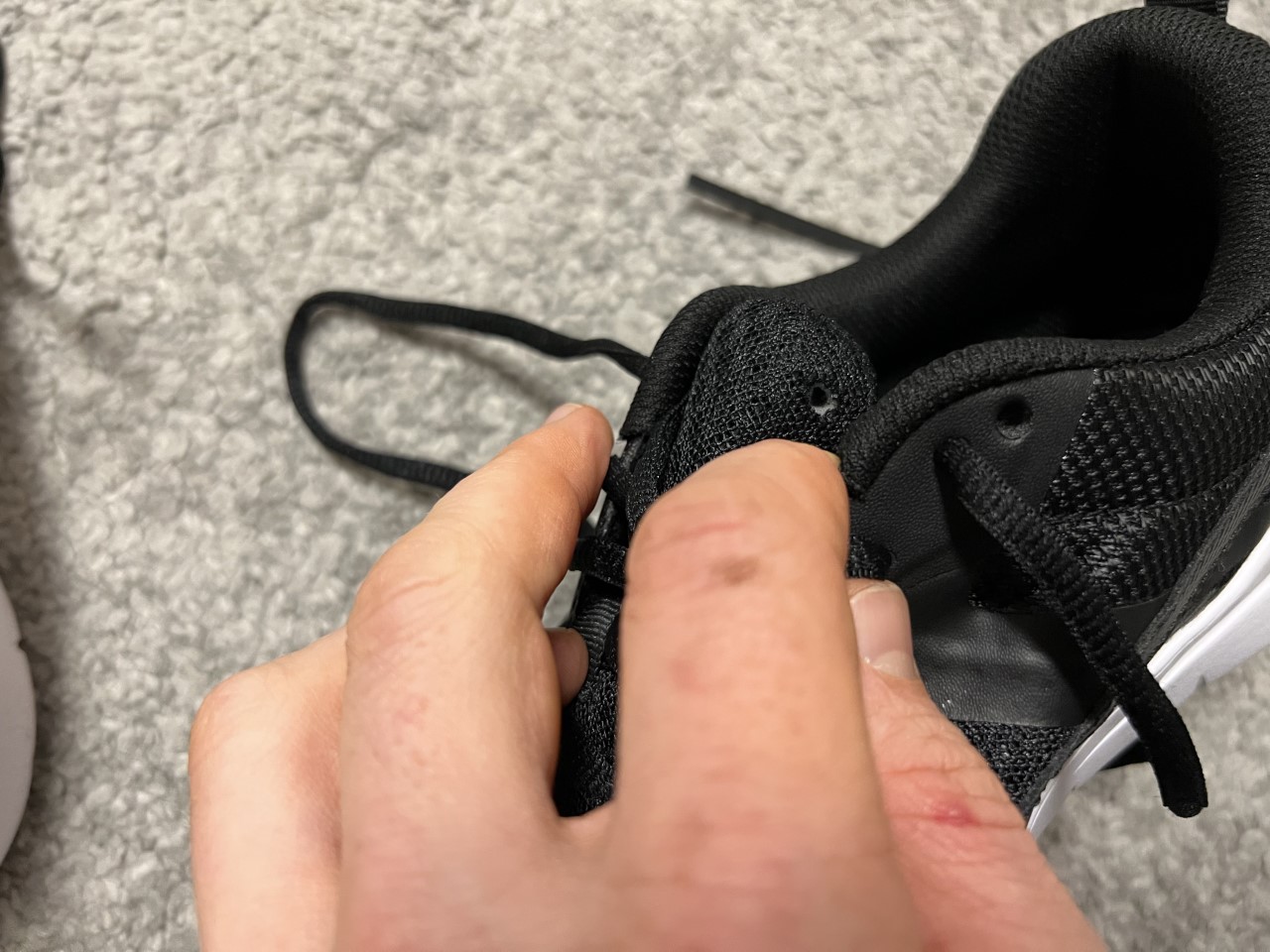
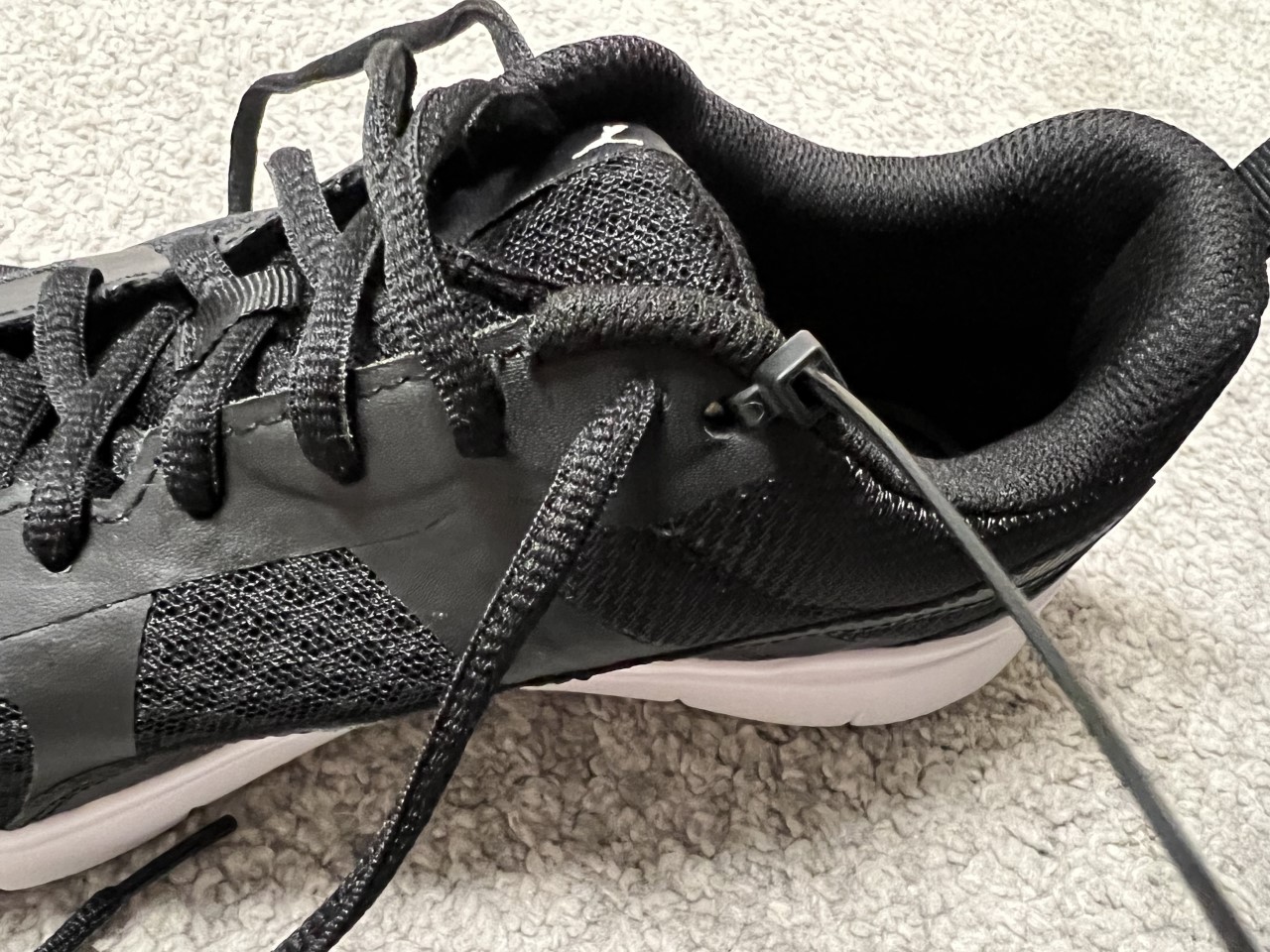
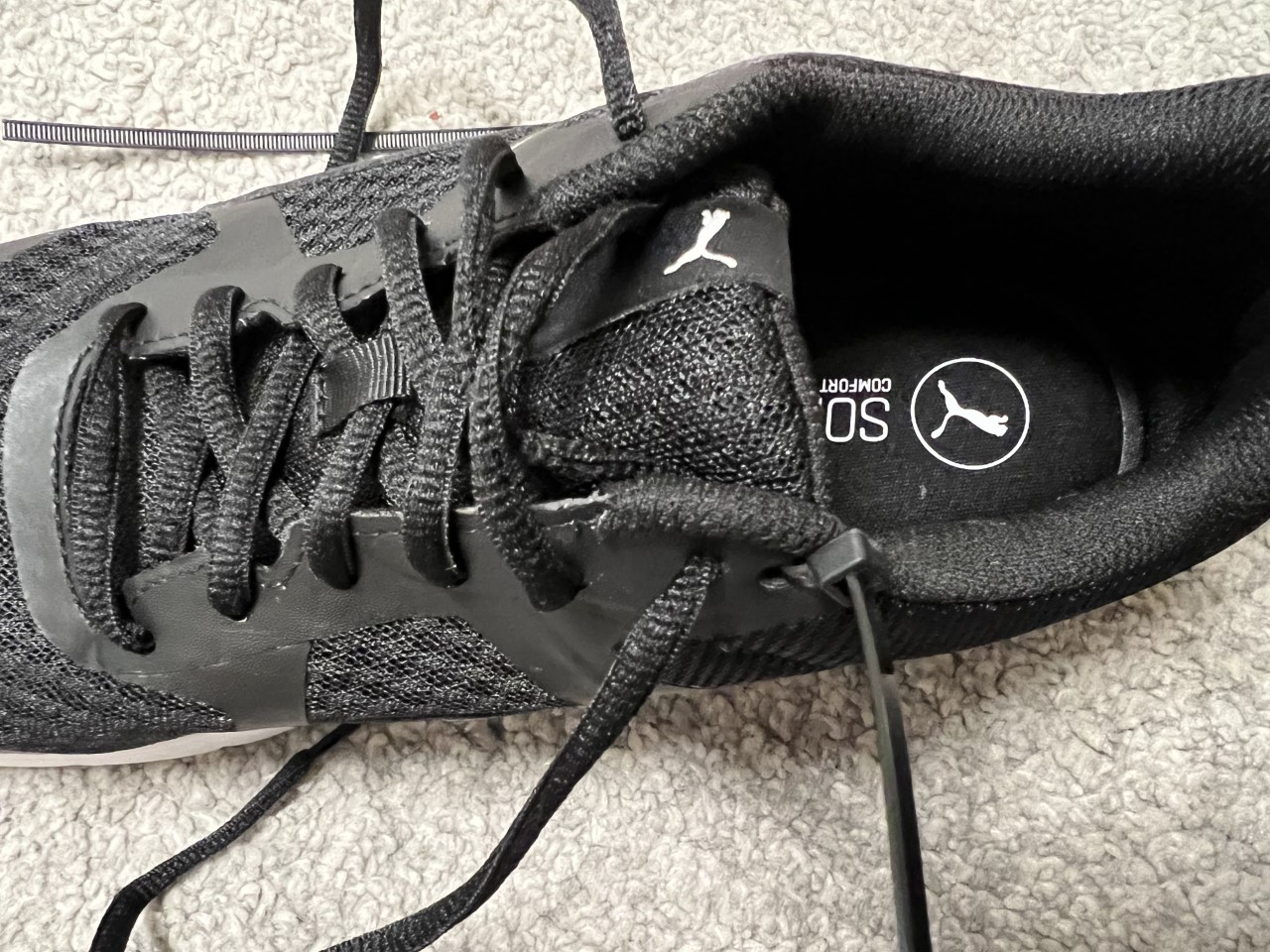
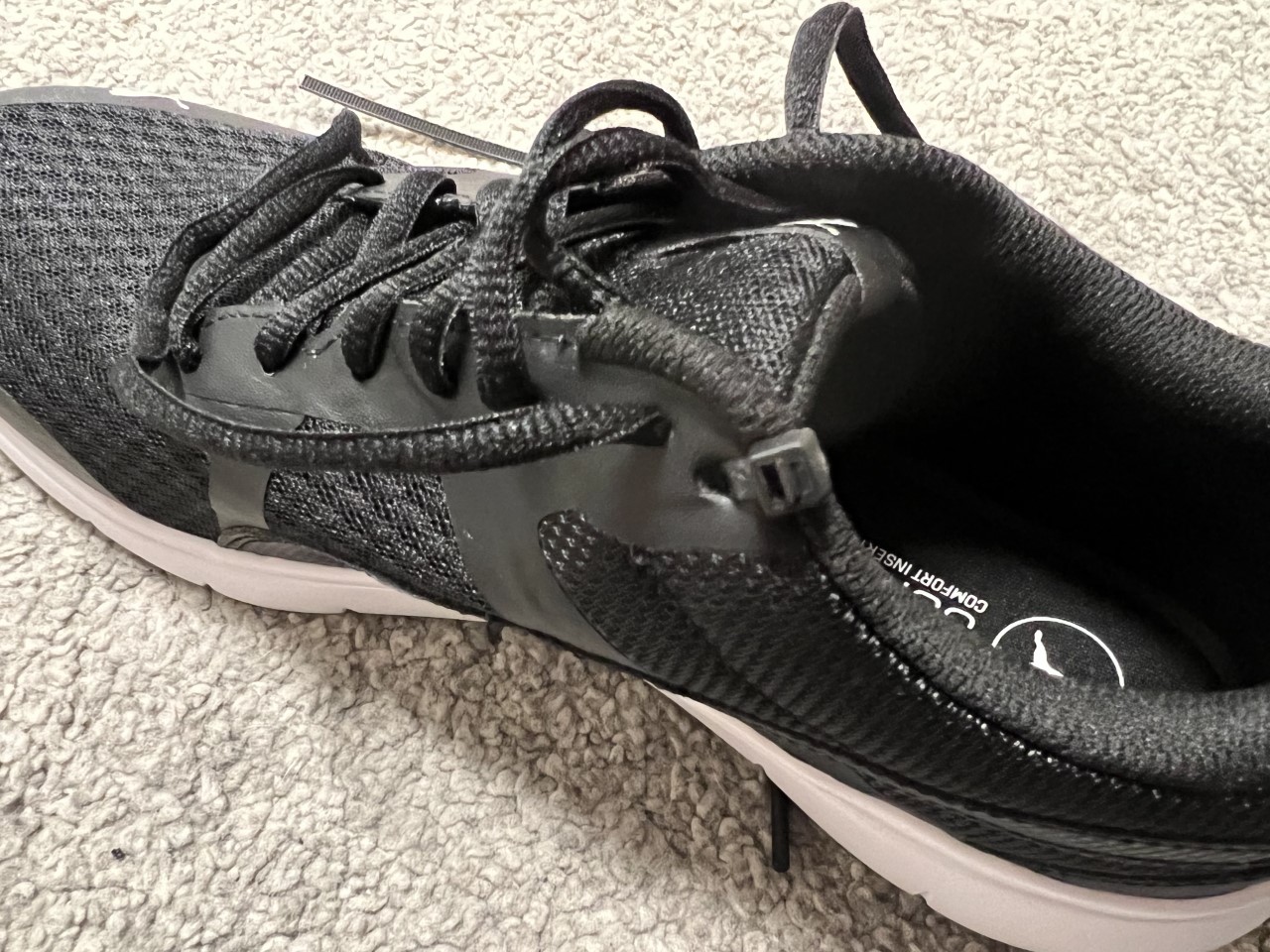
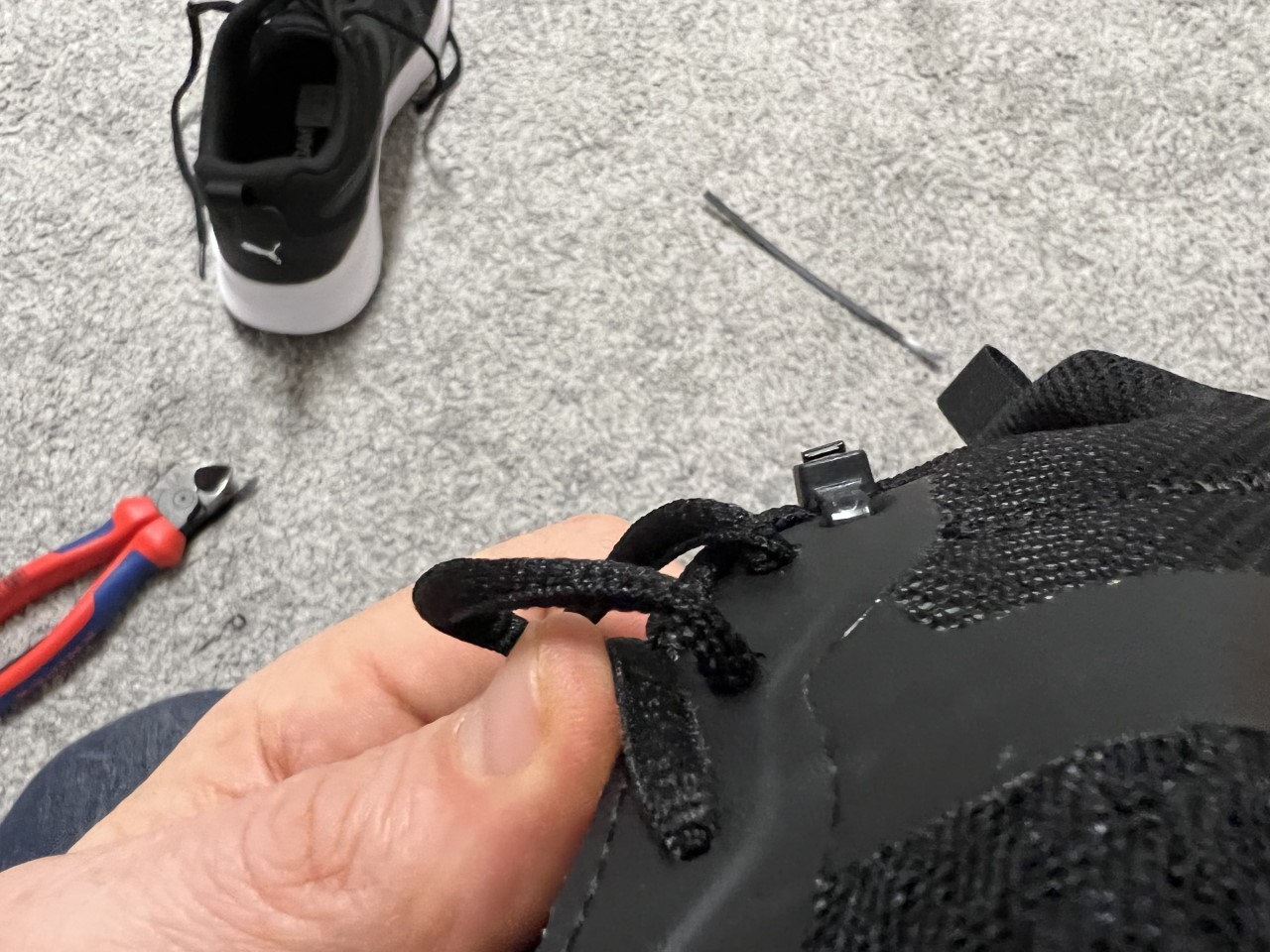
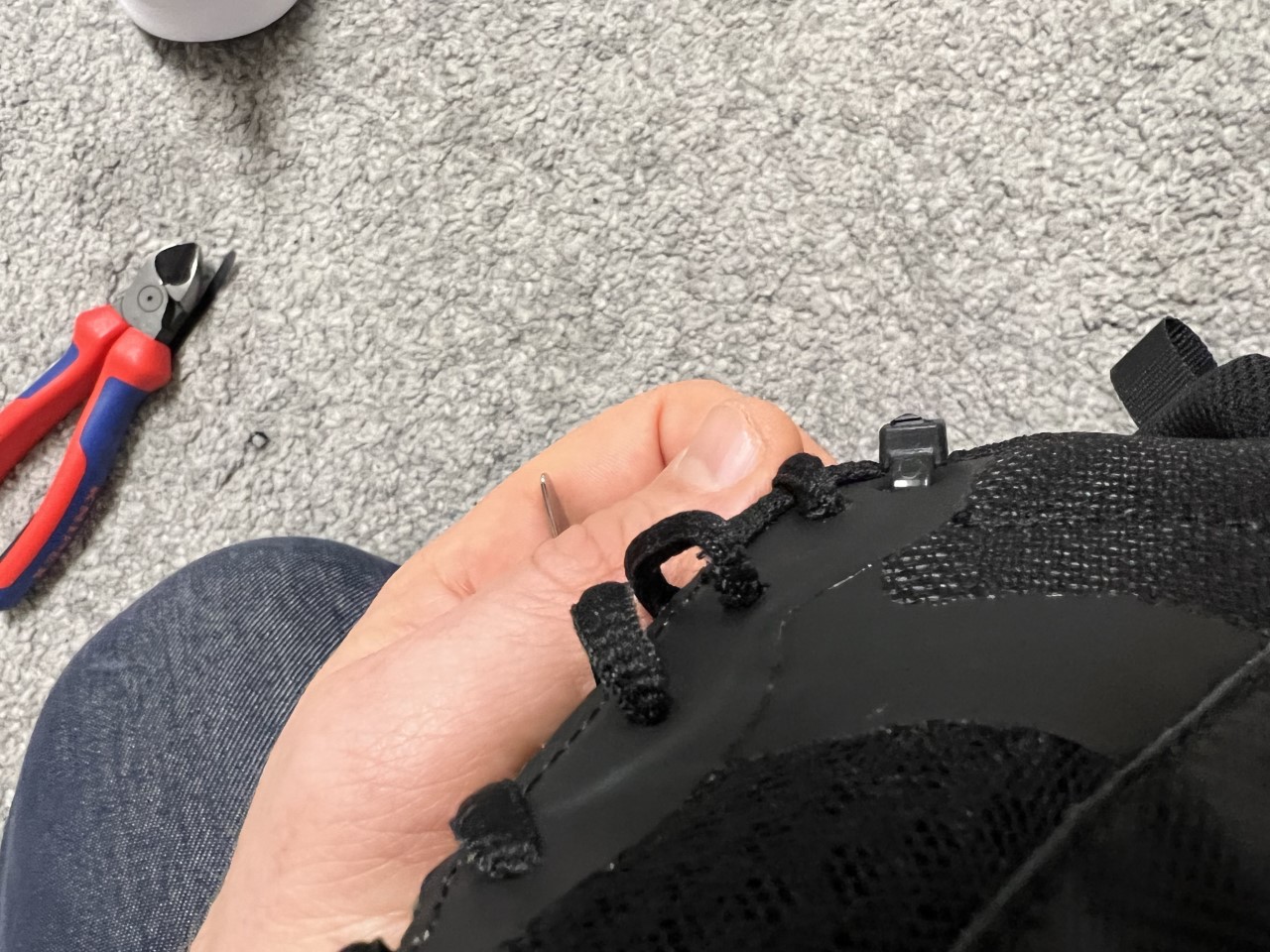
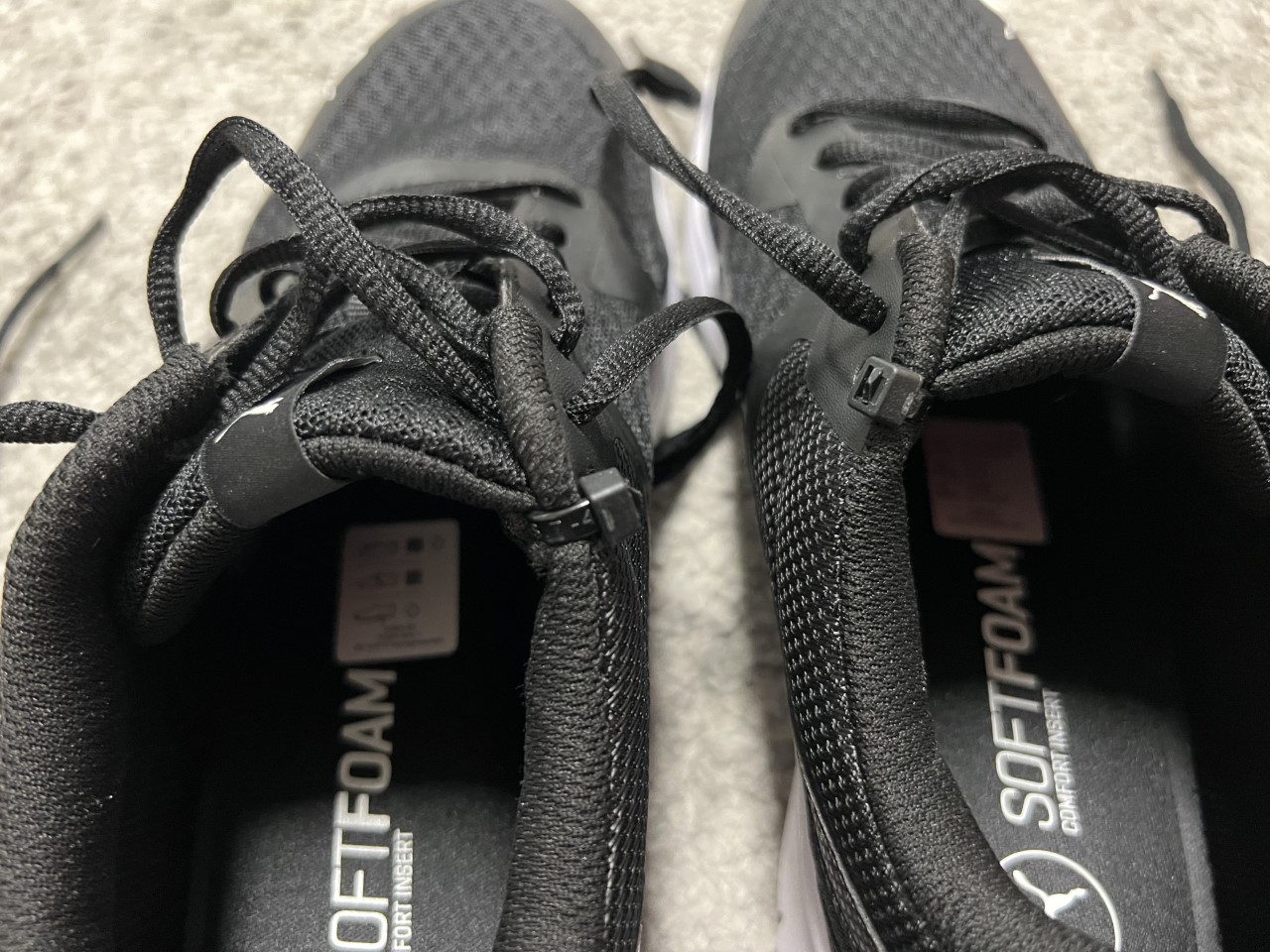
Die Schuhzunge wird mit Kabelbindern am Schuh-Rand befestigt.
Das Ganze jeweils nur auf einer Seite pro Schuh, so dass es den Schuh nicht verengt, und es auch keine Druckstellen beim Tragen gibt. Ich habe das hier als YouTube-Video mal dokumentiert:
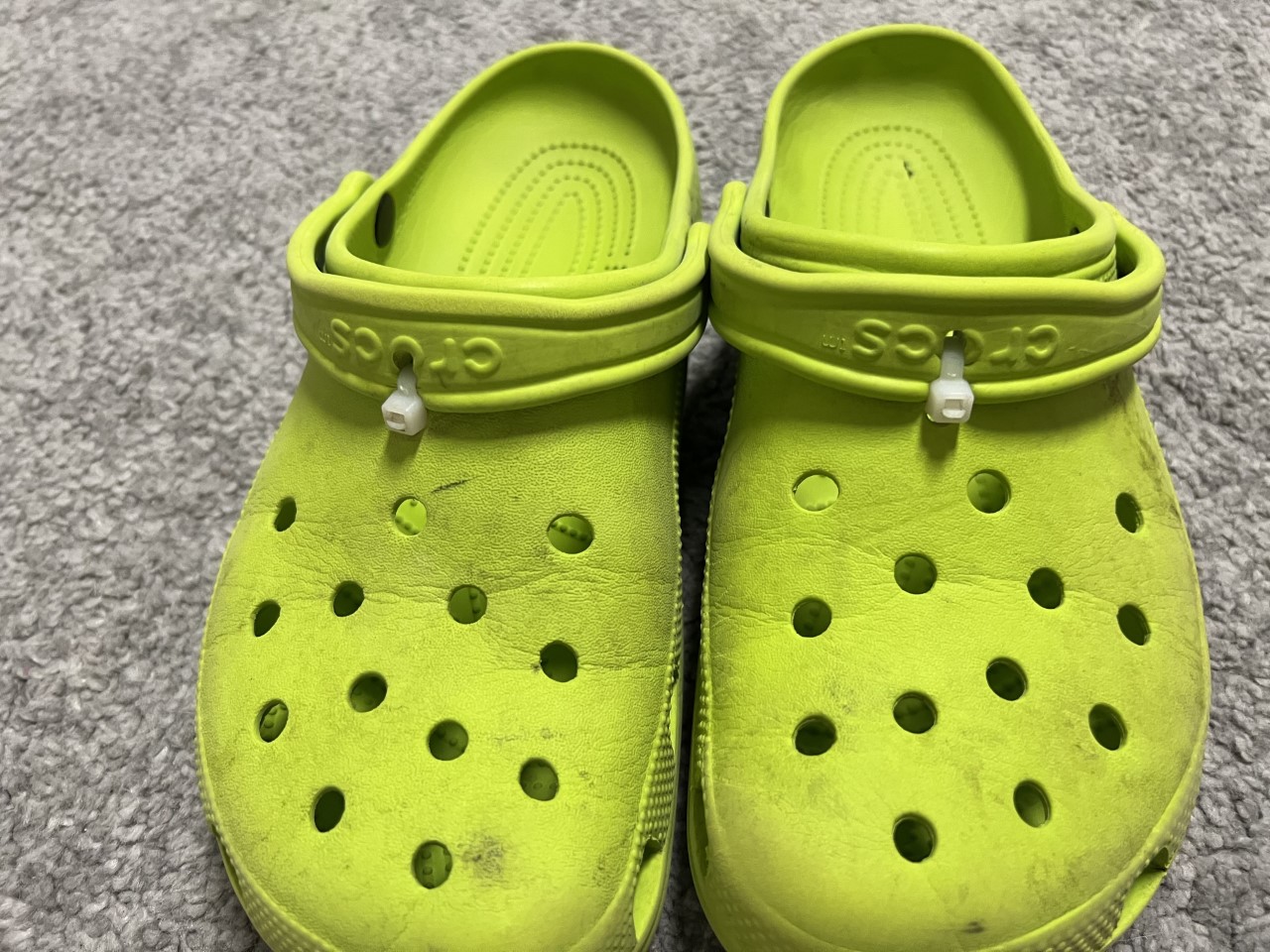
Je nach Schuh wähle ich dann z. B. schwarze oder transparente Kabelbinder. Meistens sind die dann gar nicht zu sehen. Ich bin sehr stolz auf meine „Erfindung“ und habe sie deshalb hier dokumentiert.
Nachfolgend noch ein paar Bilder beim Fertigungsprozess.
Wir brauchen Schuhe und WerkzeugKabelbinder, Seitenschneider, LochzangeLoch 1 machenLoch 1 gemachtLoch 2 gemachtKabelbinder durch die LöscherKabelbinder zusammenmachenEnger zusammen ziehenNoch enger zusammen ziehenKabelbinder ganz engKabelbinder ganz, ganz engKabelbinder abgeschnittenSeitenansicht abgeschnittener KabelbinderEcken mit Nagelknipser angeschrägtBeide Schuhe fertig Ansicht 1Beide Schuhe fertig Ansicht 2Bei Crocs geht das auch
Hoffe, es gefällt Euch so gut, dass Ihr es einmal nachmachen wollt 😊.
„How lucky I am to have something that makes saying goodbye so hard.“
Winnie the Pooh (AA Milne)
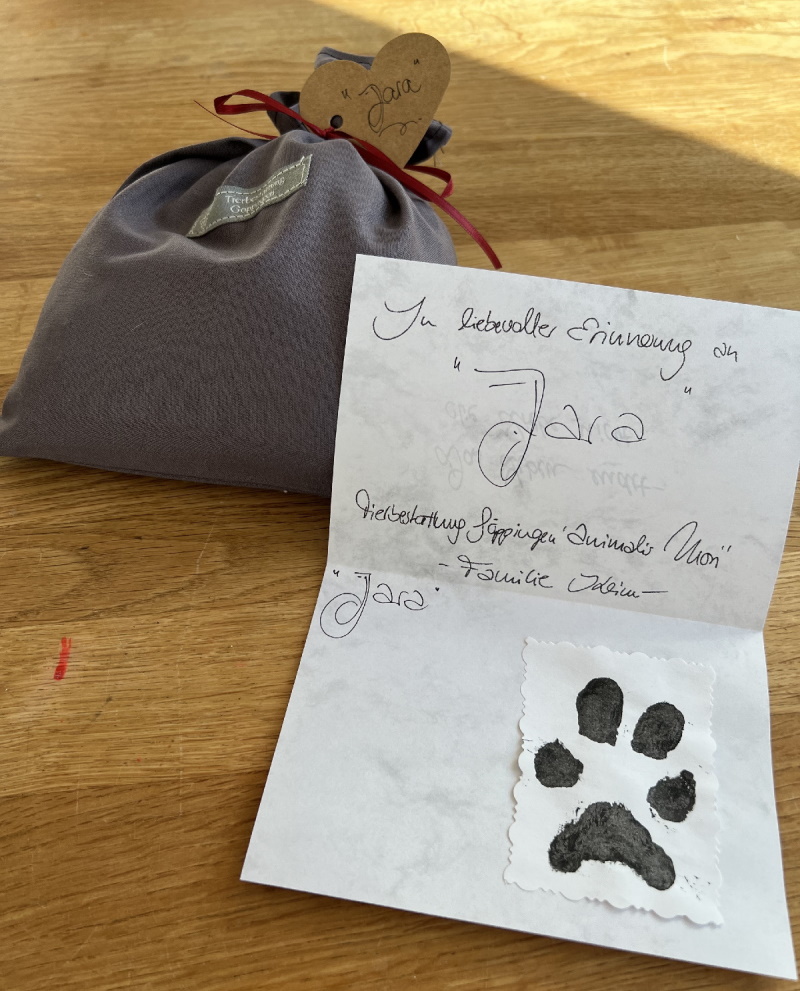
Im Alter von rund 14 Jahren ist heute, 05.01.2022, ca. 15:50 Uhr unsere Hündin Jara gestorben.
Bis vor 3 Wochen war sie noch recht munter, dann gingen die roten Blutkörperchen massiv zurück, was wohl auf einen Tumor in der Milz hindeutete. Sie war die letzten Tage zusehends apathischer und ruhiger geworden, so dass meine Tierärztin und Ehefrau Jana schweren Herzens vorgeschlagen hat, sie einzuschläfern.
Ich glaube, das war genau die richtige Entscheidung.
Jara hatte ein geiles Leben, hatte keine ernsthaften Erkrankungen, war immer ein Quell der Freude für alle, die mit ihr zu tun hatten. Und hat jetzt mit 14 Jahren für eine Hündin ihrer Größe, auch schon ein hohes Alter erreicht.
Jara war meine erste Hündin/Hund. Meine ursprüngliche Motivation war, dass ich nicht den ganzen Tag am Rechner im Büro fest klebe, sondern gezwungen bin, mehr raus zu gehen. Und weil ich schon lange einen Hund haben wollte. Jara war deshalb auch immer mit mir mit im Büro und hatte sogar eine eigene Webcam. Alle haben Jahre und ihre fröhliche Art geliebt. Die Kunden, die zu uns kamen, und auch die anderen Büro-Mieter in unserem Bürogebäude im Stauferpark Göppingen.
In den folgenden Jahren habe ich viel über Hunde lernen dürfen, meine heutige Ehefrau Jana dank Jara kennen gelernt, und insgesamt sehr viel Positives, Spannendes und Aufregendes erlebt. Danke!